WC Grain Characteristics
Grain size and microstructural control influence hardness, wear resistance, edge stability and fracture behavior.

Tungsten carbide grade selection is a balance of wear resistance, toughness, corrosion resistance and dimensional reliability. There is no single grade that is best for every application; the appropriate material depends on the dominant wear mechanisms, mechanical loading, operating environment and component design.
EnduraCarbide evaluates WC grain characteristics, binder system and content, hardness–toughness requirements, component geometry and service conditions to support application-specific grade selection for custom wear components.
Grain size and microstructural control influence hardness, wear resistance, edge stability and fracture behavior.
Cobalt and nickel binder systems, together with binder content, affect toughness, corrosion behavior and overall material performance.
Higher hardness can improve resistance to some forms of wear, while impact and mechanical loading may require greater toughness.
Abrasion, erosion, impact, sliding, slurry exposure and cyclic loading place different demands on the carbide grade.
Corrosive media and elevated-temperature service can affect binder selection and the suitability of a conventional WC-Co grade.
Section thickness, stress concentration, steel support and retention method can be as important as material properties in service.
Emphasize wear resistance while maintaining sufficient toughness for the component geometry and support conditions.
Consider particle velocity, impact angle, fluid environment and local geometry when balancing hardness, toughness and binder performance.
Grades and geometries should be selected with fracture resistance, support, retention and localized stress in mind.
Fine abrasive particles, liquid phase and possible corrosion require evaluation of both the WC skeleton and binder system.
Binder chemistry and operating temperature should be considered together with the primary wear mechanism.
Where several damage mechanisms act together, grade selection should be based on the dominant failure mode rather than maximum hardness alone.
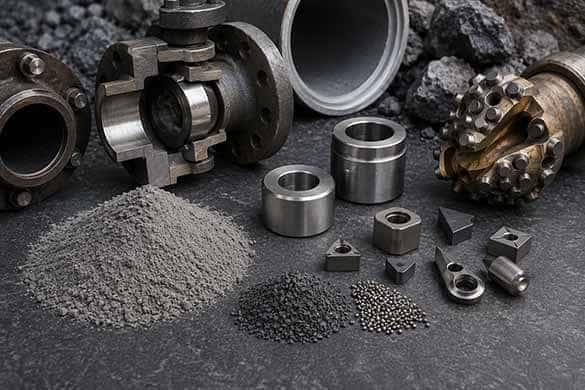
Learn how WC grain characteristics, binder type and content, hardness, toughness, corrosion resistance, component geometry, and operating conditions influence tungsten carbide grade selection.
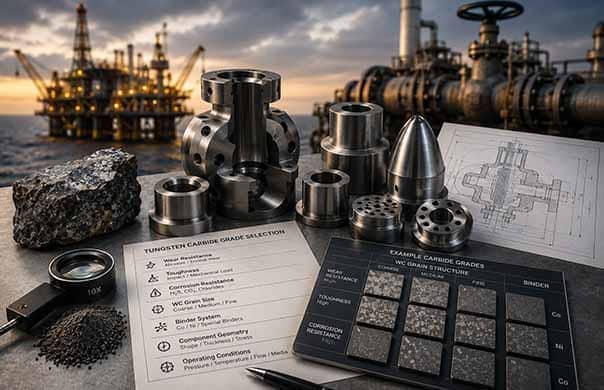
Selecting the right tungsten carbide grade for oil and gas components requires balancing wear resistance, toughness, corrosion resistance, WC grain structure, binder system, component geometry, and actual operating conditions. This engineering guide explains how these factors influence carbide performance in valves, choke components, sleeves, bushings, nozzles, and other severe-service applications
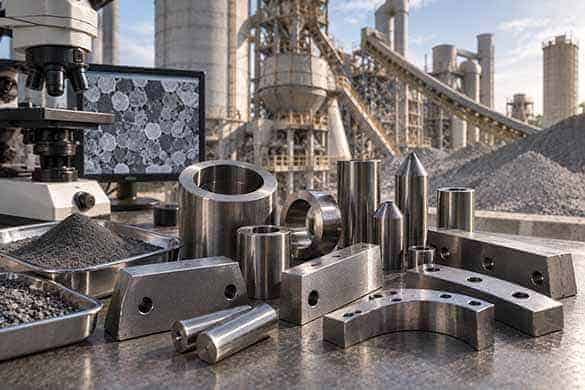
Coal, fly ash, and entrained mineral particles can cause severe abrasion and high-velocity erosion in power-generation applications. Learn where tungsten carbide nozzles, liners, sleeves, and other flow-path components can help maintain critical geometry and extend replacement intervals.
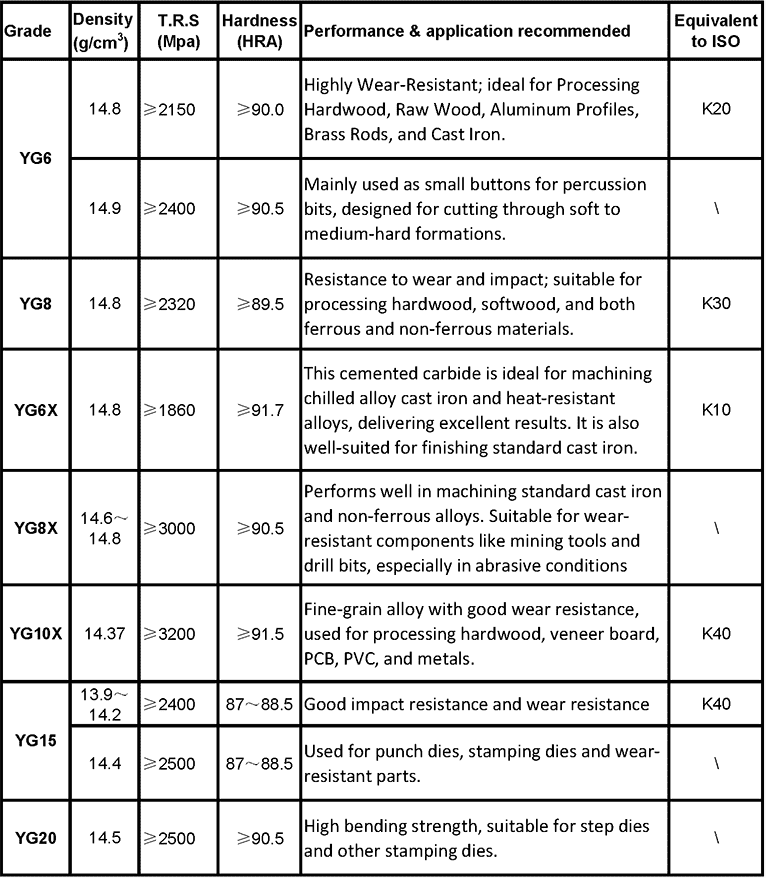
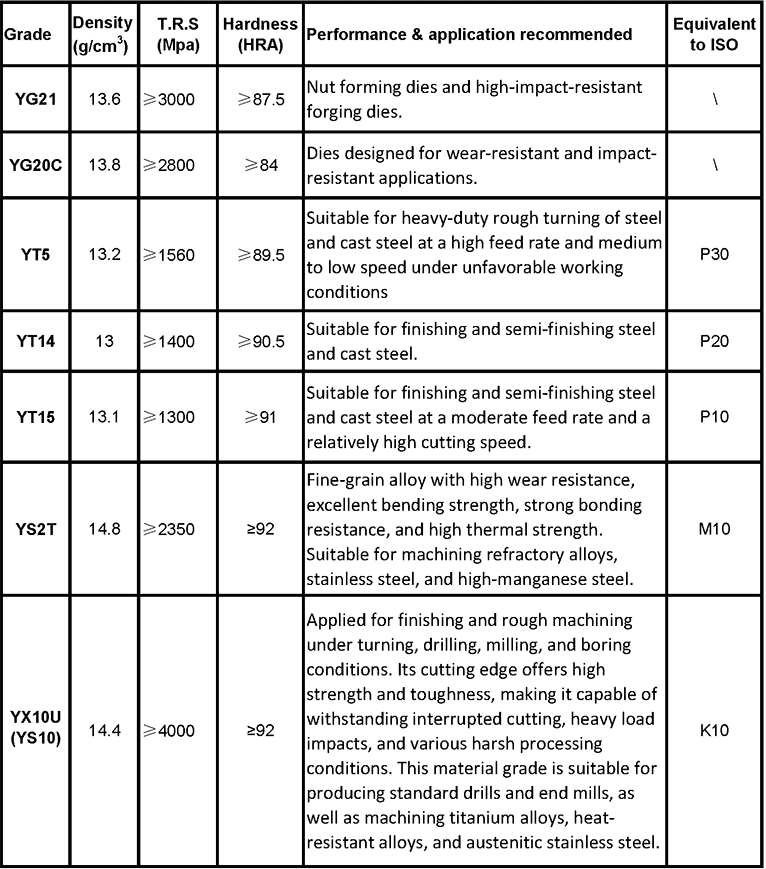
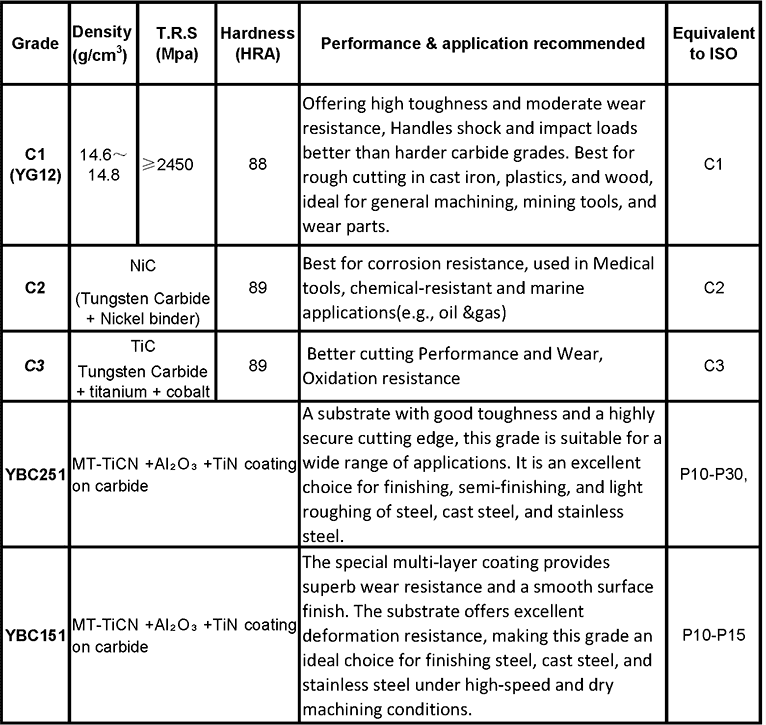
| Tungsten Carbide Grades & Quality | |||||
| Remarks: | |||||
| 1. K10-K20: Carbide K-grade materials offer high wear resistance, excellent thermal stability, brittle-resistant performance, and long tool life, making them ideal for high-speed cutting and abrasive conditions. (YG Series: Tungsten Carbide + Cobalt binder ) | |||||
| 2. P10-P20: Carbide P-grade materials are primarily designed for machining steel and tough alloys. They offer a balance of high toughness, wear resistance, and thermal stability, making them ideal for applications involving high-speed cutting and interrupted cuts.(YT Series: Tungsten Carbide+Titanium+Cobalt) | |||||
| 3. M10-M20: Carbide M-grade materials are specifically designed for machining stainless steel, cast iron, and non-ferrous metals. They offer a balance of wear resistance and toughness, making them ideal for applications that involve interrupted cuts, high heat, and work hardening materials. | |||||
| 4. S10-S20: Carbide S-grade materials are specifically designed for machining superalloys, heat-resistant alloys (HRAs), and titanium-based materials. They offer exceptional wear resistance, high-temperature stability, and toughness, making them ideal for extreme cutting conditions where tools are exposed to high stress and heat. | |||||
| 5. C10-C20: Carbide C-grade materials are specifically designed for machining cast iron and non-ferrous metals. They offer excellent wear resistance, hardness, and thermal stability, making them ideal for applications requiring high durability. | |||||
| 6. We have the capability to manufacture custom carbide tools and accessories in unlisted grades according to customer requirements. |