



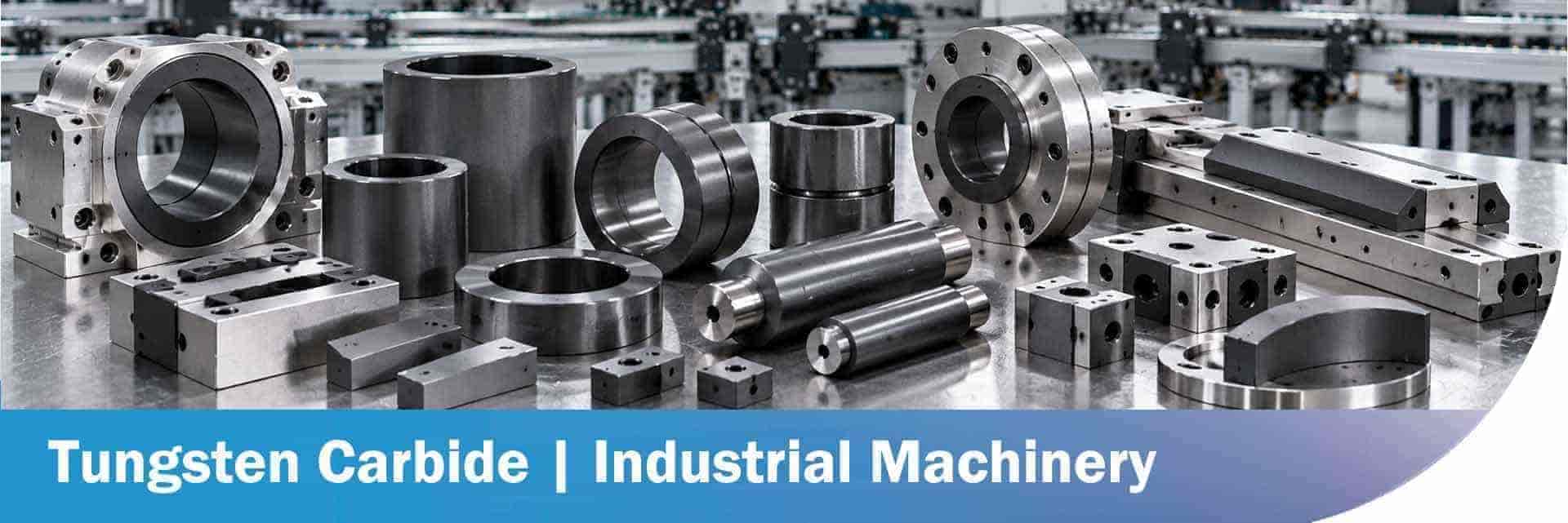
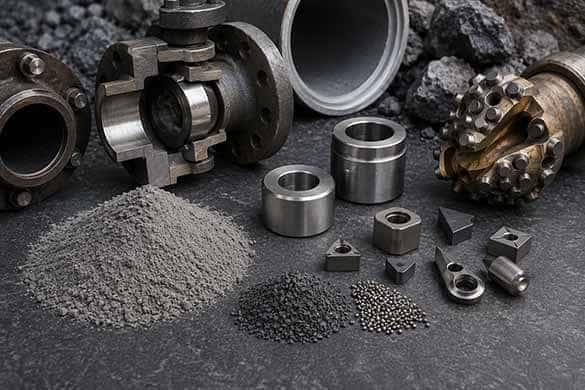
Industrial machinery often contains localized wear points exposed to sliding contact, abrasive particles, repeated loading, pressure, and vibration. These conditions can cause progressive dimensional wear, reduce component life, affect precision, and increase maintenance and replacement frequency.
EnduraCarbide Solutions manufactures custom tungsten carbide wear components for OEM equipment and production machinery, including inserts, guides, sleeves, bushings, wear blocks, nozzles, and precision components. Application-specific carbide grades and engineered geometries help resist wear, maintain critical dimensions, and extend service life.
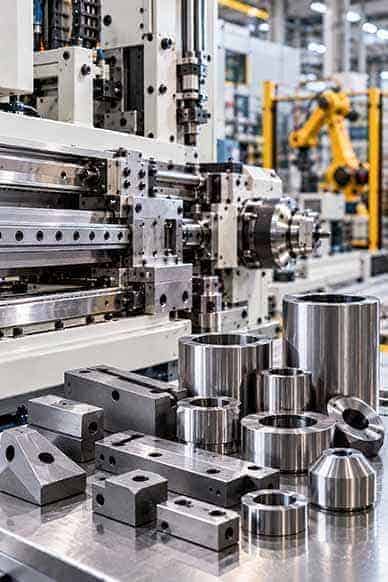
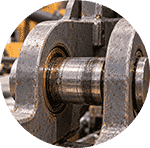
Custom tungsten carbide components are designed for localized high-wear interfaces in OEM machinery, automated equipment, production tooling, process equipment, and industrial assemblies.
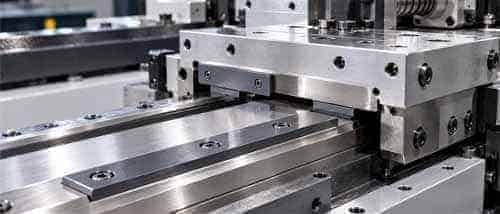
Tungsten carbide components help maintain alignment, dimensional accuracy, and consistent motion in machine interfaces exposed to repeated sliding contact, abrasion, and mechanical loading.
Main types:
Applications: Production machinery, automated equipment, transfer systems, positioning assemblies, linear-motion systems, and repetitive-motion equipment
Tungsten carbide components help maintain alignment, dimensional accuracy, and consistent motion in machine interfaces exposed to repeated sliding contact, abrasion, and mechanical loading.
Main types:
Applications: Production machinery, automated equipment, transfer systems, positioning assemblies, linear-motion systems, and repetitive-motion equipment
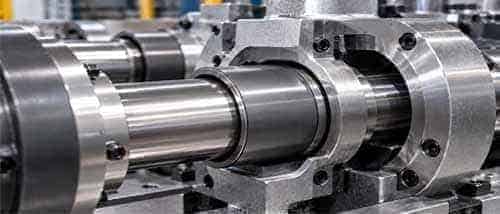
Tungsten carbide bushings, sleeves, and precision wear components provide durable, wear-resistant interfaces where repeated movement, controlled clearances, and dimensional stability are critical.
Main types:
Applications: Shafts, guide systems, rotating and reciprocating assemblies, positioning mechanisms, precision machine assemblies, and industrial equipment
Tungsten carbide bushings, sleeves, and precision wear components provide durable, wear-resistant interfaces where repeated movement, controlled clearances, and dimensional stability are critical.
Main types:
Applications: Shafts, guide systems, rotating and reciprocating assemblies, positioning mechanisms, precision machine assemblies, and industrial equipment
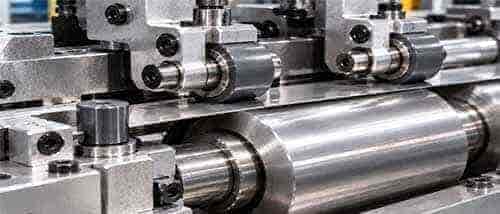
Tungsten carbide rollers, pins, and contact components provide high wear resistance and compressive strength at concentrated contact points exposed to repeated loading, rolling contact, and mechanical pressure.
Main types:
Applications: Feed mechanisms, transfer equipment, positioning systems, automated production lines, material-handling assemblies, and high-cycle machinery
Tungsten carbide rollers, pins, and contact components provide high wear resistance and compressive strength at concentrated contact points exposed to repeated loading, rolling contact, and mechanical pressure.
Main types:
Applications: Feed mechanisms, transfer equipment, positioning systems, automated production lines, material-handling assemblies, and high-cycle machinery
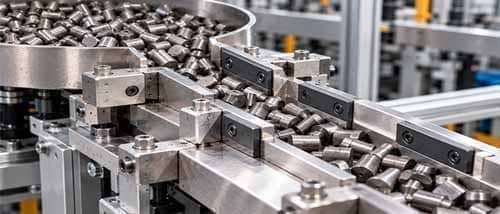
Tungsten carbide wear components help protect machinery at high-wear interfaces where parts, powders, granules, and other process materials repeatedly contact guiding, feeding, and transfer surfaces.
Main types:
Applications: Feeders, conveyors, transfer mechanisms, automated handling equipment, assembly lines, and material-handling systems
Tungsten carbide wear components help protect machinery at high-wear interfaces where parts, powders, granules, and other process materials repeatedly contact guiding, feeding, and transfer surfaces.
Main types:
Applications: Feeders, conveyors, transfer mechanisms, automated handling equipment, assembly lines, and material-handling systems
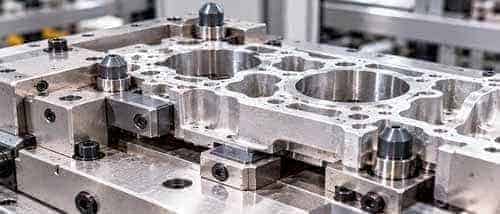
Tungsten carbide wear components help maintain repeatability, positioning accuracy, and dimensional stability at tooling and fixture interfaces exposed to repeated contact, loading, and wear.
Main types:
Applications: Production fixtures, automated tooling stations, assembly equipment, locating and positioning systems, machine-tool interfaces, and high-cycle manufacturing equipment
Tungsten carbide wear components help maintain repeatability, positioning accuracy, and dimensional stability at tooling and fixture interfaces exposed to repeated contact, loading, and wear.
Main types:
Applications: Production fixtures, automated tooling stations, assembly equipment, locating and positioning systems, machine-tool interfaces, and high-cycle manufacturing equipment
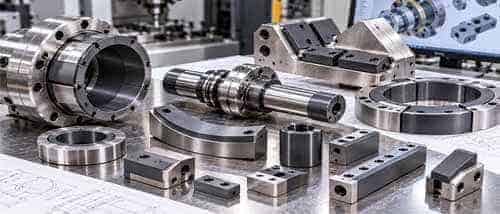
Custom tungsten carbide components and assemblies can be engineered around actual wear mechanisms, component geometry, mating interfaces, dimensional tolerances, surface-finish requirements, and operating conditions.
Main types:
Applications: Custom machinery, automation equipment, specialized production systems, OEM equipment, retrofit applications, and non-standard wear-critical assemblies
Custom tungsten carbide components and assemblies can be engineered around actual wear mechanisms, component geometry, mating interfaces, dimensional tolerances, surface-finish requirements, and operating conditions.
Main types:
Applications: Custom machinery, automation equipment, specialized production systems, OEM equipment, retrofit applications, and non-standard wear-critical assemblies
Material composition, density, microstructure, dimensional accuracy, tolerances, surface finish, and final geometry are controlled and verified according to customer drawings, specifications, and functional requirements.
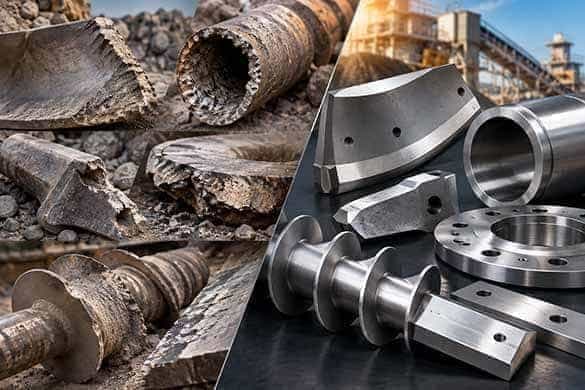
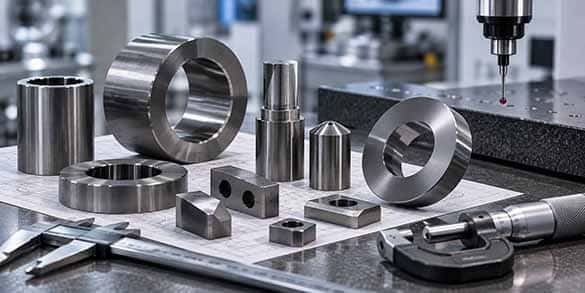
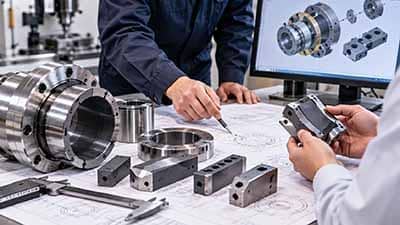
We evaluate actual motion, contact conditions, abrasive media, mechanical loading, component geometry, tolerances, and failure modes before recommending an appropriate carbide grade and component design.
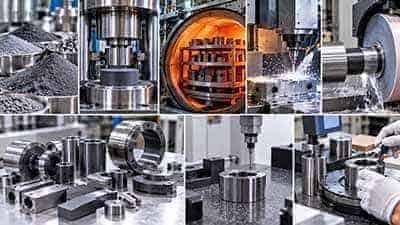
We use 100% virgin tungsten carbide raw materials. In-house control of powder preparation, pressing, sintering, precision grinding, EDM, finishing, and inspection helps ensure consistent material quality, dimensional accuracy, and repeatable production.
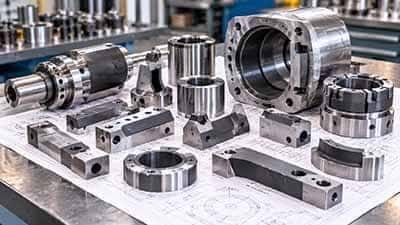
We manufacture custom and non-standard carbide components from customer drawings, samples, and specifications, including complex geometries, precision-ground parts, and carbide-to-metal assemblies.
Are wear-critical machine components losing accuracy or requiring frequent replacement?
Send us your drawings, tolerances, current material, wear patterns, loading conditions, and operating requirements for an engineering review.
Response within 24 hours • NDA available • Technical review included